The 25-Year-Old iPod: A Market-Disrupting $399 Bet That Redefined Digital Media
Apple's 2001 launch of the hard-drive music player capitalized on a fragmented market with superior connectivity and design, setting the stage for the company's mobile dominance.
By Rafael Ortega ·
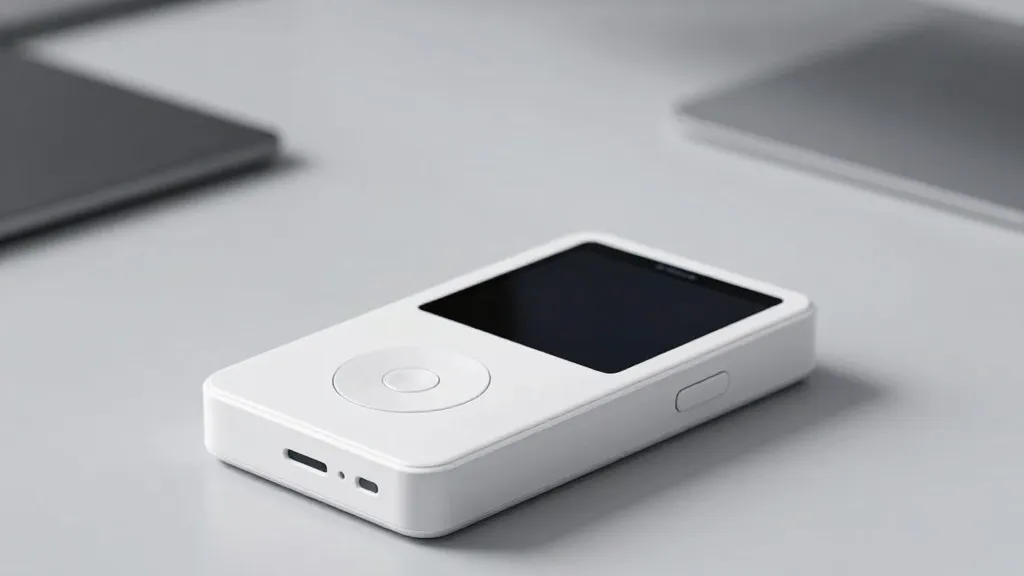
Today marks the 25th anniversary of the commercial debut of the original Apple iPod, a product that fundamentally altered the economics of portable audio. By introducing a device that fit 1,000 songs into a package the size of a deck of cards, Apple did not merely release a gadget; it claimed the center of the digital lifestyle market at a price point of $399. The device’s launch represented a strategic pivot for the Cupertino-based firm, moving beyond the Mac OS X era of iMacs and iBooks to establish a new category of consumer electronics.
The first key market driver was the selection of hard-drive-based storage over flash or CD-based competitors. At the time, the portable music landscape was fragmented among CD players, MP3 CDs, and flash players, with no dominant leader. Apple’s CEO, Steve Jobs, identified the hard-drive jukebox format as the optimal entry point, leveraging Toshiba’s 1.8-inch, 0.2-inch thick drive to achieve a 5GB capacity. This technical choice allowed the device to hold an entire music library for the average consumer, a value proposition that competitors had failed to crystallize despite the presence of larger firms like Sony and specialized players like Creative.
The second critical factor was the integration of FireWire 400 connectivity, which Apple positioned as a decisive speed advantage over the USB standard of the era. Jobs emphasized that the FireWire connection could transfer an entire CD of MP3 data in five to 10 seconds, compared to the roughly five minutes required for USB. For a full library of 1,000 songs, the transfer time was estimated at 10 minutes versus five hours on competing USB-based devices. This speed, combined with single-cable charging and 20-minute skip protection, created a functional superiority that justified the premium hardware design.
The third element was the seamless software ecosystem, specifically the Auto-Sync feature with iTunes 2. Launched simultaneously with the hardware, iTunes provided the backend for managing, burning, and syncing music libraries. The Auto-Sync functionality ensured that the curated collections on a user’s Mac were automatically mirrored to the portable device, eliminating manual file management. This integration turned the iPod into a peripheral that extended the Mac’s utility, reinforcing Jobs’ vision of the computer as the hub for all digital media, including cameras and DVD players.
From a design and manufacturing perspective, the device was engineered for mass-market appeal. The hardware was minimal, durable, and lightweight at 6.5 ounces, making it lighter than most cell phones of the period. The interface relied on a piezoelectric clicker scroll wheel for tactile feedback, allowing for one-handed navigation by artist, playlist, or song. The inclusion of a rechargeable lithium-polymer battery that offered 10 hours of playback and an 80% charge in one hour further enhanced its viability as a daily-carry item, a role it would hold until the smartphone matured.
The commercial trajectory of the iPod illustrates the long-term value of early market dominance. Although the first iPhone arrived in 2007, the iPod line continued to coexist with the smartphone for over a decade. The product line saw its final update in the 7th-generation iPod Touch in 2019, with official discontinuation occurring in 2022. The initial 2001 launch, however, remains the pivotal moment where Apple transitioned from a recovering computer company to a leader in portable consumer electronics, validating the hard-drive music player as the standard for the next quarter-century.
For businesses observing the anniversary, the iPod’s success offers a clear case study in product-market fit. Apple did not invent the digital music player, but it successfully identified the specific combination of storage capacity, transfer speed, and software ease-of-use that the market was missing. By solving the friction points of file transfer and library management, the company created a sticky ecosystem that drove hardware sales long after the novelty of the device had worn off. The $399 price tag served as the entry point for a product that would define the portable audio industry for a generation.
Source: Tom's Hardware